As of September 3, 2026, the federal government has suspended the federal excise tax on gasoline and diesel. The measure was originally scheduled to end on September 7. Ottawa, via the Department of Finance, says the suspension extends to January 31, 2027. The tax will gradually return in February and March, with the full rate returning in April.
The regular federal rate is 10¢/L on gasoline and 4¢/L on diesel.
At first glance, this may appear to be a simple affordability measure. But fuel affects more than what we pay at the pump. It influences transportation, food distribution, agriculture, construction, manufacturing, logistics, and ultimately the prices consumers see across the economy. For households, businesses, and communities, rising energy and transportation costs can quickly become a broader cost-of-living problem.
While these measures offer immediate respite, they also highlight a fundamental tension in modern economic governance: How do we balance immediate, broad-based relief with long-term fiscal stability and policy objectives?

For organizational leaders, public affairs executives, corporate strategists, and strategic communicators, understanding this dynamic is essential for managing risk, guiding stakeholder expectations, and shaping effective advocacy. A big question is: What does fuel-tax relief actually mean for Canada’s economy, communities, businesses, public-sector executives, corporate leaders, policymakers, and political leaders?
The Consumer Catch: Broad Relief vs. Targeted Need
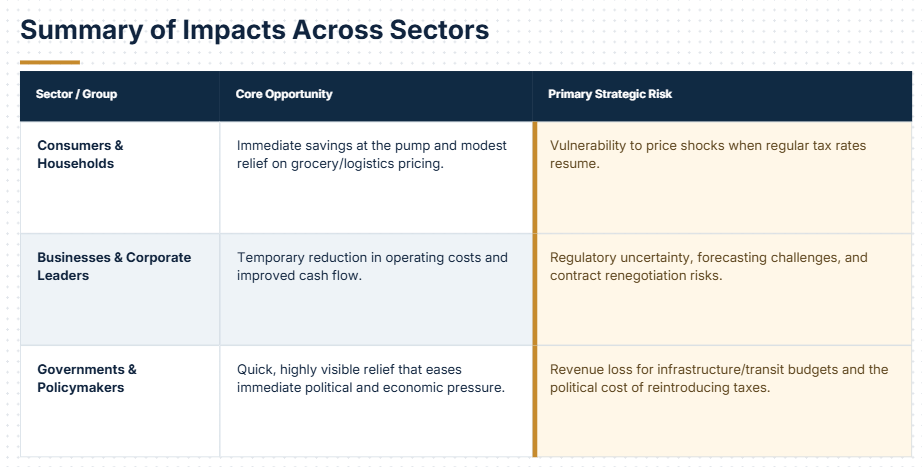
Broad interventions, such as fuel excise tax freezes, carry an undeniable public appeal. They provide instant, highly visible price relief at the point of purchase, directly easing transportation and logistics costs. For example, someone who relies on a vehicle every day, even a relatively small reduction can matter. People who already face higher grocery bills, housing costs, insurance, utilities, and other expenses can gain breathing room with every dollar saved.
For Business: The Moving Target of Corporate Forecasting
This dual approach exposes corporate leaders to a policy environment of temporary fixes and changing regulatory timelines. While effective for public sentiment, rapid policy adjustments create unpredictable regulatory environments for businesses. A reduction in fuel taxes can act as a temporary economic shock absorber, allow them to lower operating costs, protect profit margins, reduce pressure to raise prices then potentially protect jobs/investment. But will this actually guarantee that the entire saving reaches consumers?
Fluctuating excise policies and short-term tax interventions directly impact corporate forecasting. When regulatory timelines shift, industries heavily reliant on transportation, manufacturing, and food distribution must constantly re-calibrate and adjust supply chain models, pricing structures, and vendor contracts. If organizations do not manage this well, they risk alienating customers and damaging brand trust.
For Governments: Relief Comes With an Opportunity Cost
We know that fuel taxes directly fund transit and infrastructure. Pausing them starves municipal and provincial budgets. On one side, the government can provide immediate assistance to households and businesses, on the other side, the government gives up revenue. That money could otherwise be used for infrastructure, healthcare, housing, public transportation, debt reduction, or targeted support programs. It creates an important policy question: What is the most effective use of each dollar of government revenue? Could that money produce a larger benefit if it were spent somewhere else?
Policymakers face a pressing dilemma about the rollback: once people accept the lower tax, restoring it will be politically difficult.
The Strategic Path Forward
A stronger long-term strategy would probably combine temporary fuel relief + targeted assistance for vulnerable households/businesses + investment in transportation and energy infrastructure. To navigate this policy dynamic successfully, leaders across sectors should focus on three strategic pillars:
- Agile operational planning & dynamic forecasting
- Ground advocacy in transparent data and proactively communicate value drivers to their customer base.
- Advocate for targeted, predictable policy frameworks that deliver equitable economic stability without creating unexpected revenue deficits or supply chain volatility.
In an environment defined by temporary interventions, the organizations that thrive will be those that anticipate the long-term corrections.